El Raval
The Evolution of El Raval
Barri Xines (Chinatown)

Langston Hughes, 1936. Photo by Carl Van Vechten · Public domain

Nicolás Guillén · Museos de Tenerife
In summer 1937, Langston Hughes wrote about walking around "Chinatown" with Nicolás Guillén. Its working-class, marginal, and racialized life drew Hughes’ attention more than official institutions did. Raval was known at the time for nightlife, sex work, sailors, and political radicals.
They also visited the Club Cubano Julio Antonio Mella, a leftist political gathering space in Republican Barcelona named for the Cuban revolutionary Julio Antonio Mella, a Cuban Marxist student leader assassinated in Mexico City in 1929 and an icon of anti-imperialism, anti-racism, and international revolutionary solidarity. Like many such clubs, it left little physical trace after the civil war and was likely not located in one particular spot. Its presence, however, points to a parallel intellectual geography—one shaped by anti-imperialism, racial solidarity, and transatlantic revolutionary thought.
The Mella Club was a symbol not just of communism, but of Black and Caribbean revolutionary internationalism. To invoke Julio A. Mella in 1930s Barcelona was to align explicitly with anti-colonial struggle, transatlantic Black radical thought, and student and worker movements beyond Europe.
The Club Cubano Julio Antonio Mella was a meeting place for a number of writers during the Spanish Civil War, including Pablo de la Torriente Brau (1901-1936), a Cuban journalist and Civil War correspondent, and Juan Marinello (1898-1977), a Cuban intellectual who was active in Republican Spain’s cultural and political congresses.
Little Harlem
.jpg)
Wikimedia Commons · CC BY
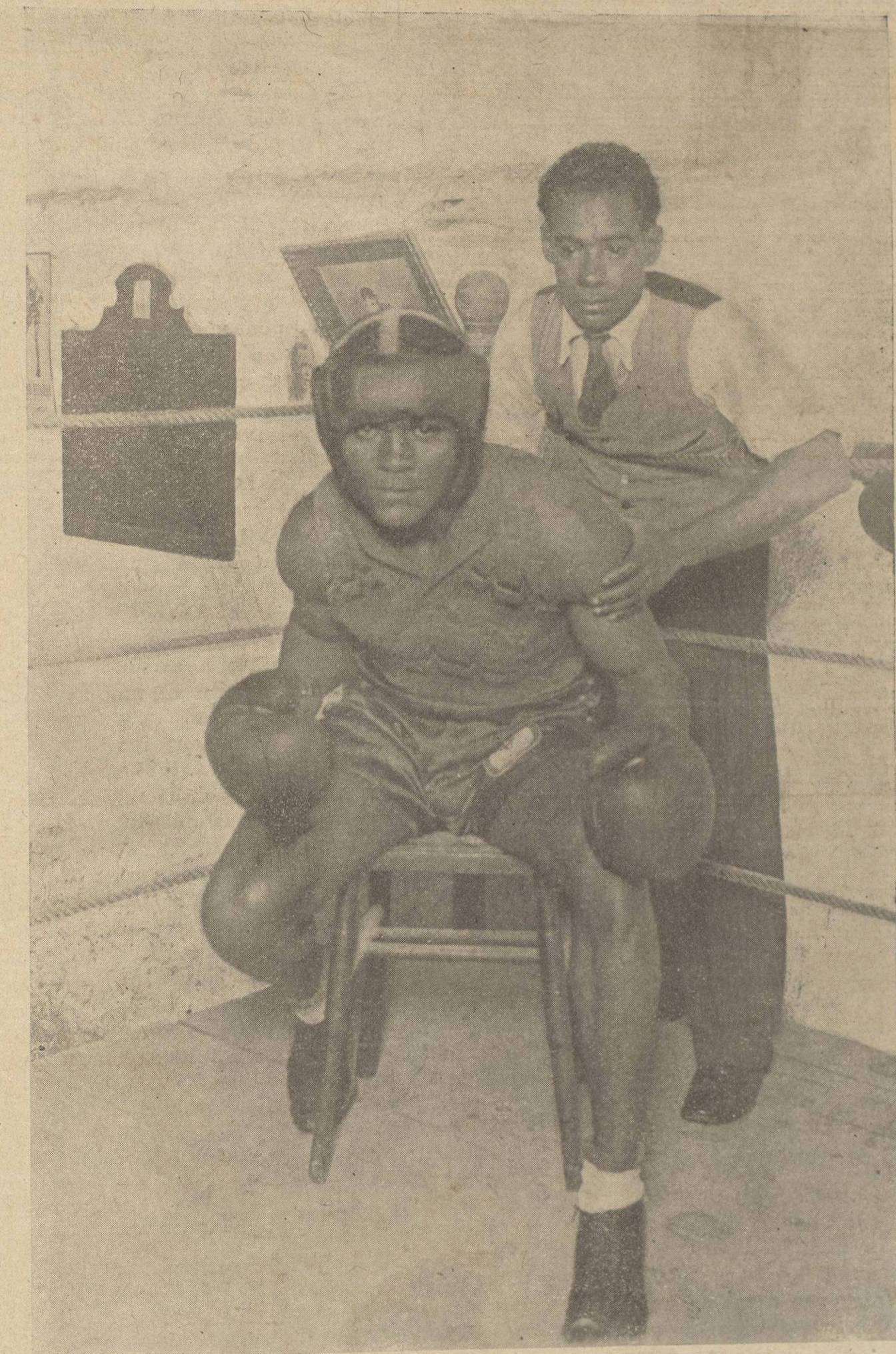
Kid Tunero · El Nacional
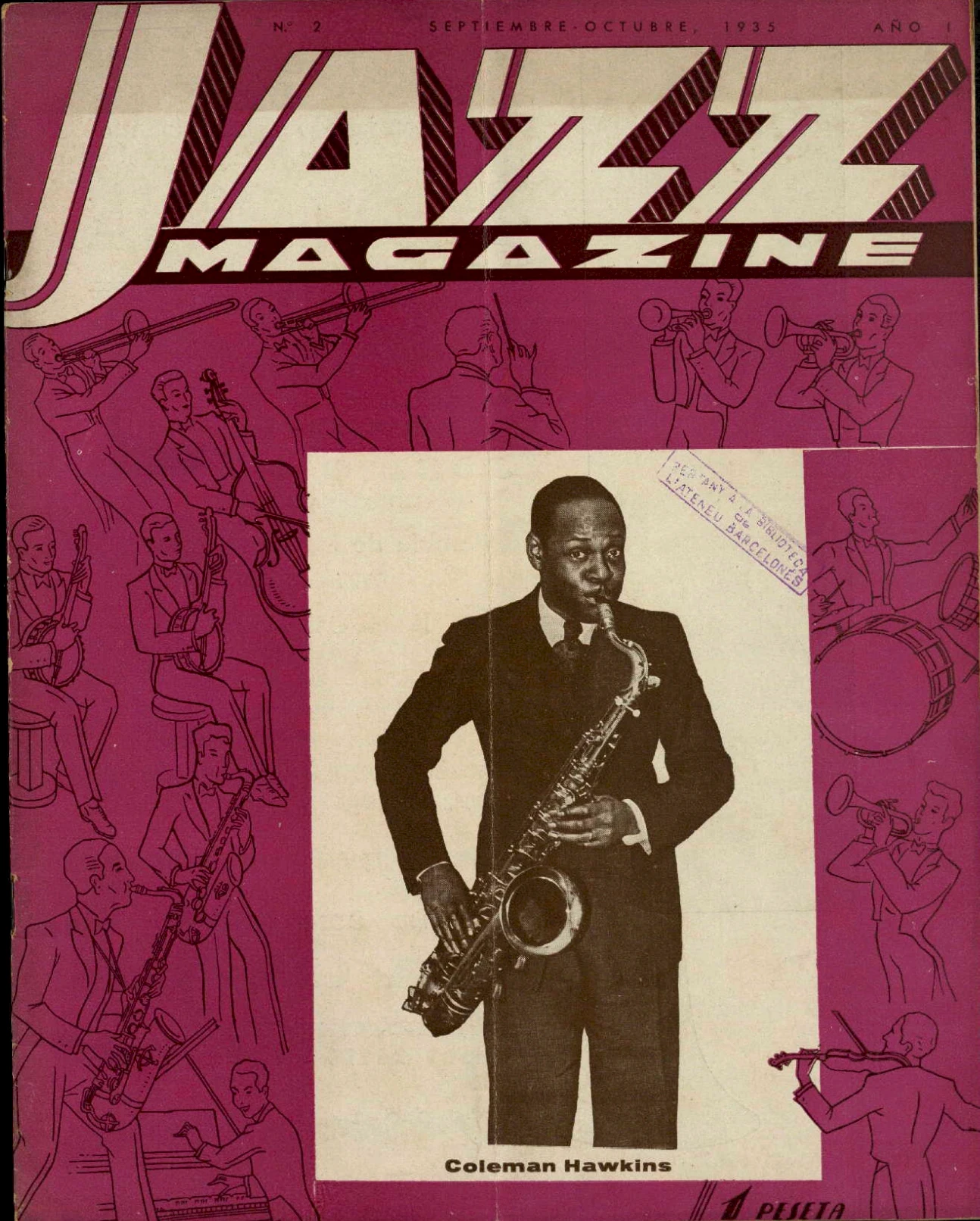
Jazz magazine · Internationale Online
At the same time that Raval was known as Barri Xines, it was also called Little Harlem "due to the concentration of Black musicians and boxers. The newspapers of the time went so far as to describe a 'Black invasion' coinciding with the jazz phenomenon, even saying Blackness was in fashion."
As journalist and researcher Xavier Montanyà wrote regarding the life of Cuban boxer Kid Tunero: "In Carrer Nou de la Rambla, Barcelona's Harlem, Cubans were king. It could be said that they had spontaneously formed a tumultuous community that brought together Blacks of various origins: Puerto Rico, Martinique, Senegal, Alabama, Georgia and, the poorest of all, the natives of Equatorial Guinea, the Spanish colony in Black Africa."
Although Hughes and Guillén spent time in Raval, they likely missed the jazz scene either because the clubs were marginal during a time of war or because of the racial segregation surrounding them. The Barcelona Hot Club, which opened in 1935 on Carrer de l'Hospital, operated under principles of racial exclusion and cultural hierarchy: its obsession with differentiating 'artistic' jazz from popular jazz in no way signified protecting or respecting Black people.
The Olympia (Carrer de Casanova, Eixample) and the Eden (Nou de la Rambla, 12) were the real meeting places for Barcelona's Black residents — musicians, pugilists, artists and dancers of North American, Cuban, Dominican, Puerto Rican, Guinean, and Senegalese origin. These bars and clubs were likely spaces of solidarity and exchange, where all variants of jazz, but above all hot jazz, were played. The atmosphere would, in all probability, have been very different from the Hot Club, which, while appealing to questions of art, authenticity and genre, stripped jazz of its Black roots and any kind of sociocultural philosophy, reducing it to a depoliticized plaything for the avant-garde."